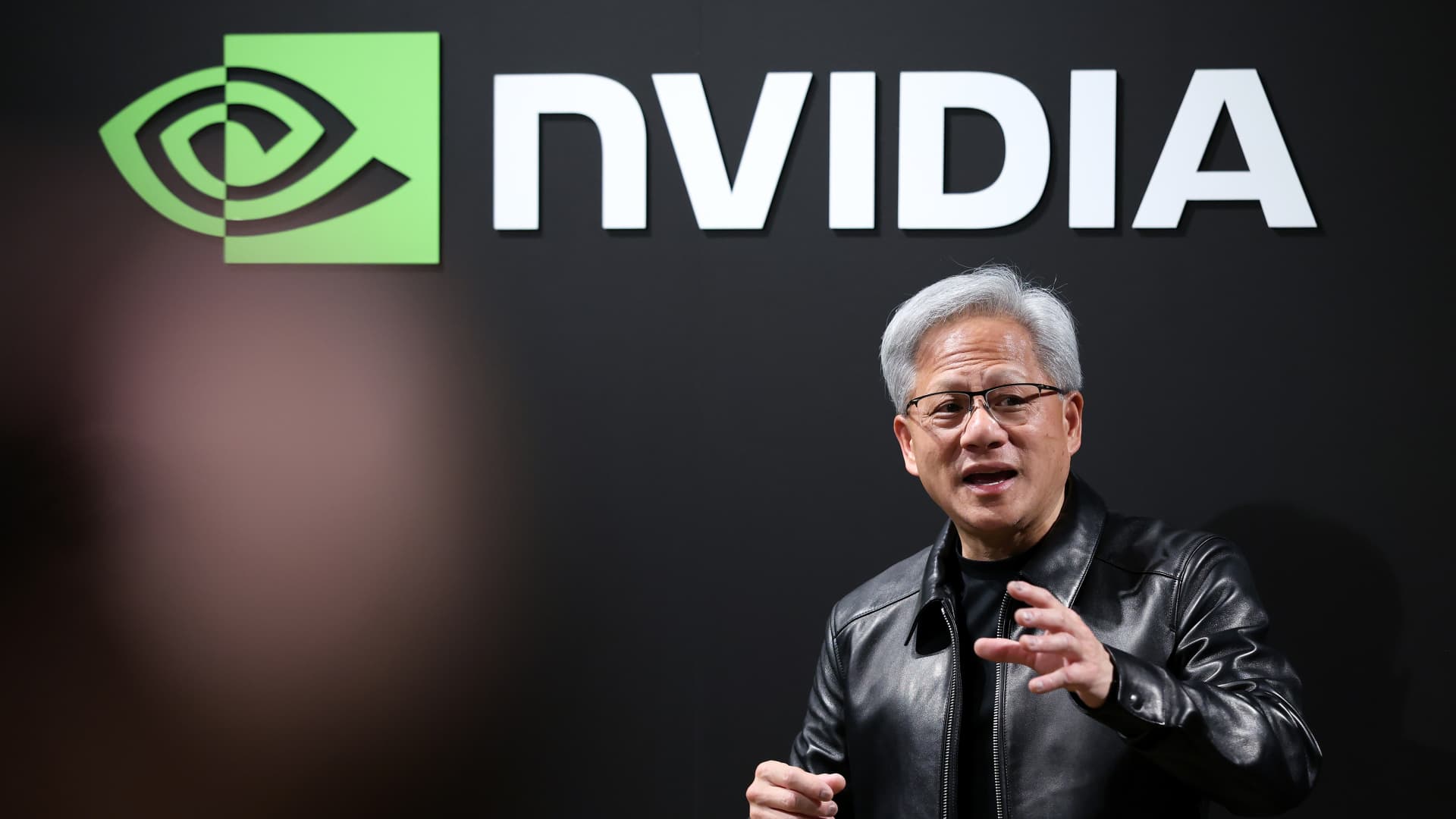
Not every empire is built where the spotlight already exists. Some are built quietly, in the background, powering the very systems that later take over the world.
In 1963, in Tainan, Taiwan, Jensen Huang was born into a life that would require early adaptation. As a child, he moved to the United States, navigating cultural shifts, unfamiliar environments, and the pressure to find his place in a competitive system.
His early years were not defined by luxury or immediate success. In fact, one of his first experiences in America involved being sent to a boarding school where he initially struggled to fit in. It was a tough introduction, but it built something important, resilience and independence.
He studied electrical engineering at Oregon State University and later earned a master’s degree from Stanford University. These were not just academic achievements, they were stepping stones into a field that was still evolving, semiconductor technology.
Before building anything of his own, Huang worked inside the system.
He gained experience at companies like Advanced Micro Devices and LSI Logic, learning how chips are designed, manufactured, and scaled. These roles were critical. They gave him a deep understanding of hardware, efficiency, and the complexity behind computing systems.
But he saw something others were not fully focused on.
In the early 1990s, personal computing was growing, and graphics processing was becoming more important, especially for gaming and visual computing. Most companies treated graphics as a secondary feature. Huang saw it as a future industry.
In 1993, he co-founded Nvidia.
The vision was clear, build specialized processors for graphics.
But the path was anything but smooth.
In the early years, Nvidia struggled. The company came dangerously close to running out of money. Early products did not succeed as expected. Competition was intense. At one point, failure was not just possible, it was near.
Huang made a critical decision.
Instead of spreading resources thin, Nvidia focused everything on building a single successful chip architecture. That focus led to the development of the RIVA 128, one of the company’s first major successes. It stabilized the business and proved that the vision had potential.
From there, Nvidia did not just build products, it built a platform.
The introduction of the GPU (Graphics Processing Unit) marked a turning point. These chips were not just for rendering images, they were capable of handling massive parallel computations. At the time, this capability was underappreciated.
But Huang stayed consistent.
While others focused on CPUs and general computing, Nvidia doubled down on GPUs. The company invested heavily in research, development, and software ecosystems like CUDA, allowing developers to use GPUs for more than graphics.
This was a long-term bet.
For years, the broader industry did not fully recognize the importance of GPUs beyond gaming. But Huang continued building, refining, and expanding the technology.
Then the world caught up.
As artificial intelligence, machine learning, and data processing began to scale, GPUs became essential. The very architecture Nvidia had been refining for years became the backbone of modern AI systems.
What looked like a niche focus became global dominance.
Nvidia’s growth accelerated, positioning it as one of the most valuable and influential technology companies in the world. Its chips now power data centers, AI research, autonomous systems, and more.
But the journey includes pressure.
The semiconductor industry is highly competitive and volatile. Supply chain challenges, technological shifts, and global demand fluctuations constantly test companies in this space. Nvidia has faced competition from major players, strategic risks, and the challenge of staying ahead in a rapidly evolving field.
Huang’s leadership style has been described as intense, detail-oriented, and deeply committed to long-term vision. He is known for focusing on both hardware and software integration, ensuring that Nvidia’s products are not just powerful, but usable at scale.
What makes his story powerful is not just the outcome, but the discipline behind it.
He did not chase immediate success. He built toward a future that was not yet obvious.
He did not abandon his vision when results were slow. He refined it.
He did not follow the crowd. He positioned himself ahead of it.
This is where the deeper lesson begins.
At Skulearn, we bring stories like this to help you understand how real success is built in modern industries. Skulearn exists to help you think long-term, develop technical and strategic clarity, and build skills that remain relevant as the world changes.
Jensen Huang’s journey teaches something powerful. You can start with uncertainty and still build clarity. You can face near failure and still recover. And you can commit to a vision long enough that when the world finally recognizes it, you are already leading.
Because in the end, success is not always about being first. It is about being prepared when the moment arrives.
And that leaves a question worth reflecting on.
What are you building today that the world has not yet realized it needs?
Learn Life's Skills At skulearn.com