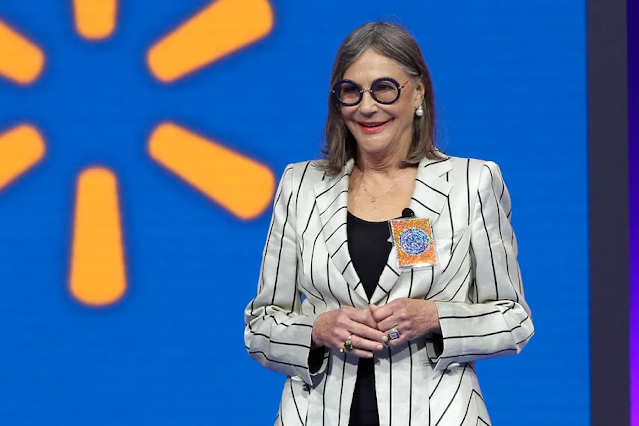
In 1949, in Newport, Arkansas, Alice Walton was born into a family that would go on to shape one of the largest retail empires in the world. As the daughter of Sam Walton, founder of Walmart, her life was connected early to business, scale, and success. But her journey would not be defined by simply continuing what was already built.
While her family focused heavily on expanding Walmart into a global powerhouse, Alice Walton found herself drawn in a different direction, one that did not always align with expectations.
She studied economics and finance at Trinity University, building a foundation in business and markets. Her early career included roles in finance and investment, working with firms and later engaging in her own ventures. But like many entrepreneurial paths, it was not without setbacks.
She faced financial losses in some of her early business pursuits, experiences that tested her judgment, resilience, and ability to recover. There were moments where decisions did not go as planned, where outcomes forced reflection and recalibration. These were not widely publicized victories, but they were critical in shaping her understanding of risk and responsibility.
But her defining impact would come from something different.
Instead of focusing solely on corporate expansion, she turned her attention toward art, culture, and access. She believed that exposure to art should not be limited by geography or privilege. That belief led to one of her most significant contributions, the creation of the Crystal Bridges Museum of American Art.
Building the museum was not a simple project. It required vision, funding, coordination, and persistence. It meant creating something of global cultural value in a region not traditionally known as a major art destination. Many questioned the idea. Some doubted its impact.
But she built it anyway.
Crystal Bridges became a major cultural institution, attracting visitors from across the United States and beyond, and providing free access to American art. It was not just about displaying paintings. It was about changing who gets access to culture, education, and creative inspiration.
Her journey reflects a different kind of success, one that moves beyond profit into influence and contribution.
Like many figures connected to large-scale wealth, her life has also included public scrutiny, discussions about privilege, responsibility, and the role of wealth in society. There have been personal challenges and controversies along the way, moments that added complexity to her public story.
But what stands out is her decision to define her own path within a powerful legacy.
She did not simply inherit. She interpreted, redirected, and built something aligned with her own vision.
This is where the deeper lesson begins.
At Skulearn, we bring stories like this to show that success is not always about following a predefined route. Skulearn exists to help you understand that you can take what you have been given, whether it is much or little, and shape it into something meaningful in your own way.
Alice Walton’s journey teaches something powerful. You can step away from expectation and still create impact. You can experience setbacks and still build something lasting. And you can use resources, whether inherited or earned, to create opportunities for others.
Because in the end, legacy is not just what you receive. It is what you choose to do with it.
And that leaves a question worth reflecting on.
What if your path is not meant to mirror what has already been done, but to create something entirely your own?