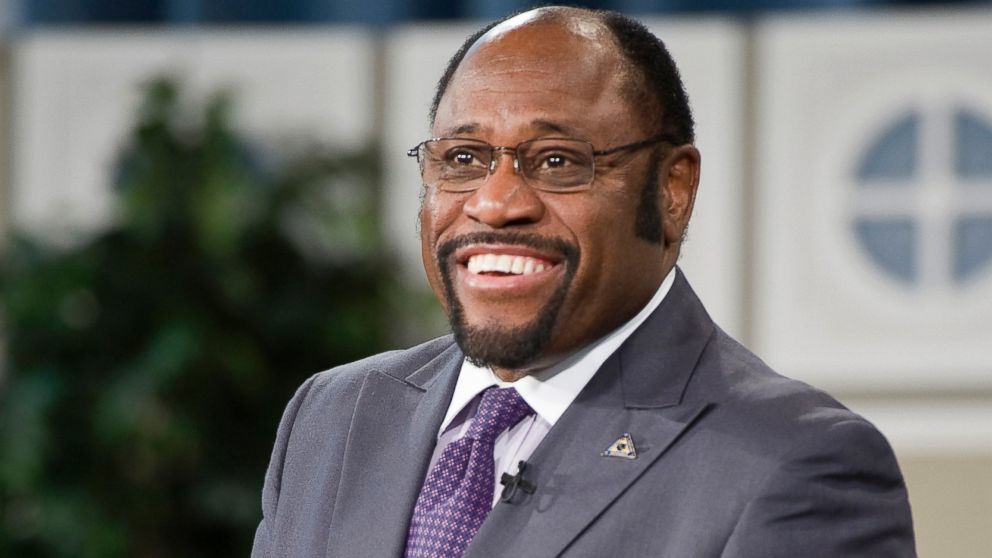
## ## The richest place on earth is not a gold mine, an oil field, or a bank vault. It is the cemetery, where countless dreams, inventions, books, businesses, and ideas were buried because someone never discovered why they were born.
That belief became the heartbeat of the life and message of Dr. Myles Munroe.
Born on April 20, 1954, in Nassau, Bahamas, Myles Munroe did not grow up surrounded by privilege or wealth. He was raised in a modest family in a community where opportunities were limited and expectations were often low. As one of many children, he experienced firsthand what it meant to have dreams that seemed larger than the environment around him.
Yet even as a young man, there was something stirring inside him, a desire to understand purpose.
School did not instantly reveal his destiny. The path ahead was uncertain, and the odds of becoming an internationally respected speaker, author, and leadership mentor seemed remote. But Munroe refused to believe that circumstances should determine a person's future.
He often credited a life-changing encounter with faith during his youth as the turning point that gave him direction. Rather than seeing faith as merely a religious experience, he began viewing it as a call to unlock human potential and live intentionally.
That conviction shaped every decision that followed.
He earned a scholarship to study in the United States and attended Oral Roberts University in Tulsa, Oklahoma, where he studied fine arts, education, and theology-related disciplines. Living abroad exposed him to new ideas and broadened his vision. It also demanded resilience. Adapting to another country, another culture, and another educational system required discipline and determination.
After completing his studies, he returned to the Bahamas instead of remaining in the United States.
That decision surprised many.
He believed his assignment was not simply to build a career, but to build people.
With his wife, Ruth Munroe, he founded Bahamas Faith Ministries International, beginning with a vision that far exceeded its early resources. Like many founders, he encountered financial limitations, organizational challenges, and the difficult work of earning public trust. Building a ministry from the ground up required persistence long before it produced visible results.
But Dr. Munroe's influence grew because his message reached beyond church walls.
He taught that every human being was created with purpose, that leadership is rooted in service, and that true success comes not from chasing money but from solving meaningful problems. His books and seminars emphasized personal responsibility, vision, discipline, and the importance of discovering one's unique contribution.
Among his most influential works were writings on purpose, leadership, vision, and the concept of the Kingdom of God. His books, including The Purpose and Power of Vision and Understanding Your Potential, reached readers around the world and were translated into multiple languages.
One of the defining characteristics of his teaching was its practicality.
He encouraged people to write down goals, invest in continuous learning, develop character before seeking influence, and avoid measuring success solely by possessions or titles. He argued that leadership was not reserved for a select few but was the responsibility of anyone willing to cultivate integrity, competence, and service.
His platform expanded internationally.
Dr. Munroe addressed audiences that included students, entrepreneurs, government leaders, business executives, and faith communities across numerous countries. He advised organizations on leadership development and frequently spoke about nation-building, economic empowerment, and the value of education.
Yet his journey was not free from criticism or challenge.
Like many prominent public figures, he faced scrutiny, disagreement, and the constant demands that accompany global visibility. Building institutions required navigating financial realities, organizational complexity, and differing expectations. Success did not exempt him from pressure. It simply gave him larger problems to solve.
Still, those who observed him often noted his consistency. He remained deeply committed to preparation, reading, study, and careful communication. He believed that excellence should be practiced long before it is displayed.
Perhaps no principle became more closely associated with him than purpose.
He frequently taught that when people discover why they exist, discipline becomes easier, distractions lose their power, and obstacles become temporary rather than permanent. In his view, purpose gives pain meaning and turns setbacks into classrooms instead of prisons.
That philosophy resonated with millions because it spoke to a universal human question: Why am I here?
Dr. Munroe also emphasized that leadership requires self-mastery. He warned against allowing emotions, pride, or short-term gratification to control long-term decisions. Instead, he encouraged habits of reading, planning, punctuality, accountability, and lifelong learning.
Then came a heartbreaking conclusion to a remarkable life.
On November 9, 2014, Dr. Myles Munroe, his wife Ruth, and several others lost their lives in an aircraft accident near Grand Bahama while traveling to a leadership conference. The tragedy shocked audiences around the world. Tributes poured in from political leaders, pastors, educators, entrepreneurs, and countless individuals whose lives had been shaped by his teaching.
But while his voice was silenced, his ideas continued to travel.
His books still inspire readers. His messages continue to circulate globally. His emphasis on purpose remains one of the defining themes associated with his legacy.
At Skulearn, we share stories like Dr. Myles Munroe's because education is about more than acquiring information. It is about discovering why your gifts matter and learning how to use them to serve others. We believe, as Dr. Munroe often taught, that untapped potential is one of humanity's greatest losses, and that every learner carries abilities that deserve to be developed with intention and discipline.
His life offers enduring lessons for every generation.
You may begin with limited resources, but you are not limited to your beginnings.
You may face rejection, but rejection does not determine your destiny.
You may experience setbacks, criticism, or disappointment, but those moments can become the very experiences that prepare you for greater responsibility.
Most importantly, success without purpose can leave a person empty, while purpose pursued with discipline can create influence that outlives a lifetime.
And perhaps the question Dr. Myles Munroe would leave with every young person is not, "What do you want to be when you grow up?"
It is something far more profound: "Why were you born, and what gift would the world lose if you never chose to use it?"
VISIT: [https://skulearn.com/role-models]